

How AI Process Discovery Helps Enterprises Scale Automation Faster

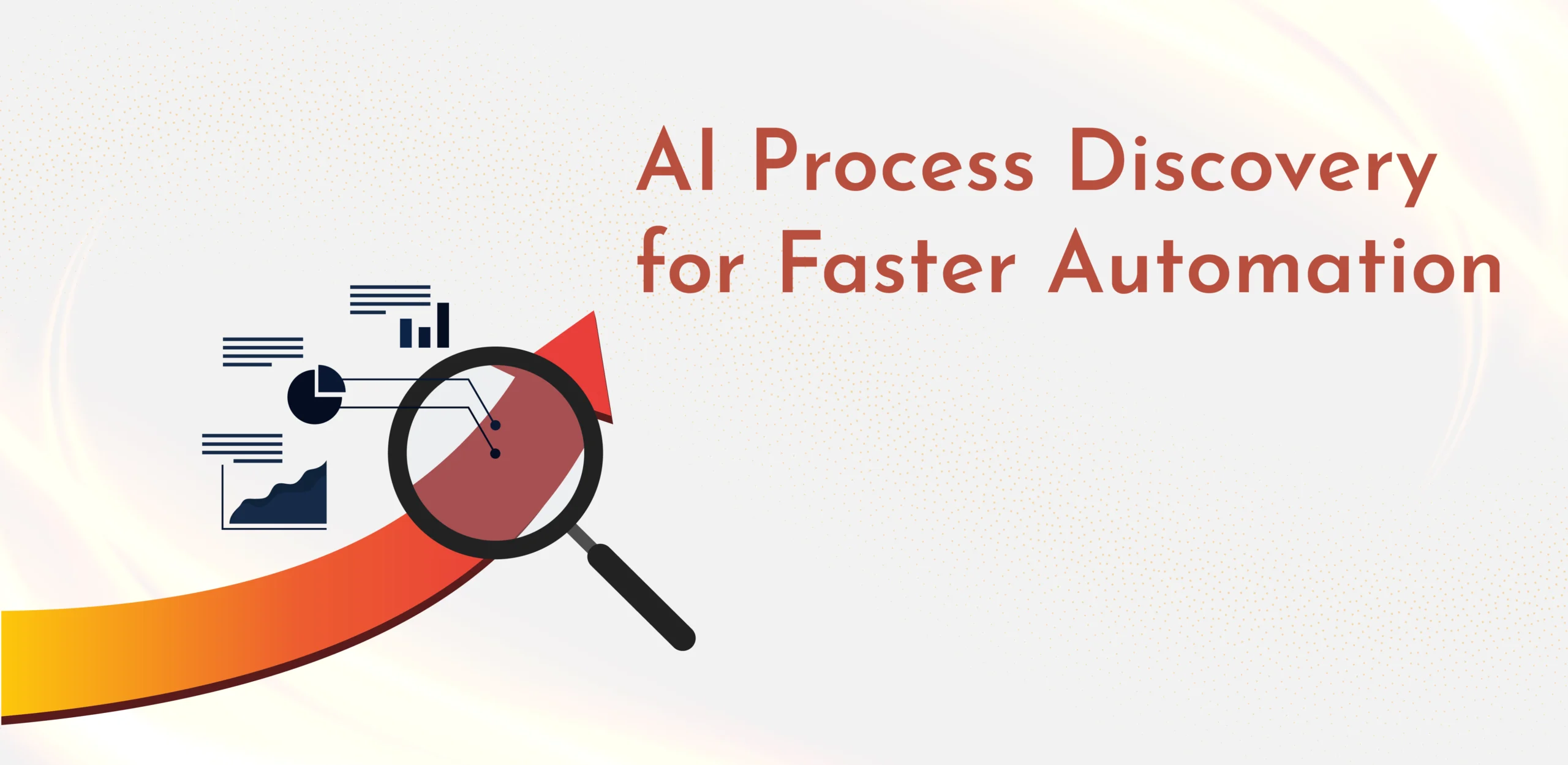
If your developers can build a bot in two weeks, why does it still take three months to reach production?
The answer usually isn’t in the code. It’s in everything that happens before the code: the workshops, the screen-share sessions, the half-finished documents, and the “one more meeting” to clarify an exception nobody wrote down. That pre-development stretch is where automation programs quietly lose momentum. It’s also exactly where AI process discovery is changing the math.
Why Does Enterprise Automation Still Take So Long to Scale?
Most enterprises don’t have an automation problem. They have an intake problem.
Before anything gets built, analysts run repeated workshops, shadow users, and translate tribal knowledge into documents. Documentation lags behind the work. Requirements arrive incomplete, developers find the gaps mid-build, and rework eats the timeline. Meanwhile, with dozens of candidates in the queue, teams struggle to decide which processes deserve attention first.
What Is AI Process Discovery?
AI process discovery is the use of artificial intelligence to capture, analyze, and document how a business process is performed, turning raw process knowledge into structured, automation-ready requirements.
Instead of relying on interviews and manual note-taking, AI analyzes inputs such as process recordings, screen activity, and existing documentation. It identifies the steps, applications, business rules, decision points, and exceptions. The result is a consistent process definition that business owners and developers can both work from.
How Is AI Process Discovery Different From Traditional Process Discovery?
| Traditional discovery | AI process discovery |
| Manual observation and interviews | AI-assisted analysis of recordings and inputs |
| Free-form documents that vary by analyst | Structured, standardized outputs |
| Weeks of workshops per process | Significantly faster discovery cycles |
| Subjective interpretation | More consistent, repeatable analysis |
Why Is Process Discovery a Bottleneck in Enterprise Automation?
Discovery doesn’t scale on its own. Every new process needs analyst hours, and skilled analysts are scarce. Documentation quality depends on who wrote it. Context gets lost in the handoff between business teams and developers. Multiply that across a pipeline of 50 or 100 processes, and your Automation CoE becomes a queue instead of an engine.
How Does AI Process Discovery Help Enterprises Scale Automation Faster?
Reduces Manual Discovery Effort
Analysts review and refine an AI-generated draft instead of starting from a blank page.
Creates More Consistent Process Documentation
Every process is documented in the same structure, no matter who captured it.
Improves Automation Readiness
Steps, rules, inputs, and exceptions surface up front, so developers start with what they actually need.
Helps Identify Feasibility Earlier
Complexity, application dependencies, and edge cases become visible before budget is committed.
Reduces Rework Before Development
Fewer gaps in requirements means fewer surprises during build and testing.
Increases Automation Pipeline Velocity
When intake moves faster, the whole pipeline moves faster. More processes get evaluated, approved, and delivered every quarter.
How Can AI Process Discovery Improve Automation Prioritization?
For executives, the hard question isn’t how to automate. It’s what to automate first. AI-assisted discovery gives you comparable data on every candidate: complexity, business value, feasibility, effort, risk, and ROI potential. Prioritization stops being a debate and becomes a decision, so funding flows to the processes most likely to deliver returns quickly.
What Role Does AI Play in Process Documentation?
AI can take a single process recording and produce the artifacts teams traditionally build by hand: a Process Definition Document (PDD), test cases, feasibility assessments, effort estimates, and structured requirements. Subject-matter experts still validate the output. They just start from a solid draft, not a blank template.
How AutomationCOE Uses AI for Process Discovery
AutomationCOE, developed by Tecnoprism, uses ARIA to help enterprises turn process knowledge into automation-ready requirements.
ARIA is the platform’s intake agent. A business user records the process as they perform it. ARIA analyzes the recording, generates the PDD, creates test cases, assesses feasibility, and estimates development effort. Built-in PII protection keeps sensitive customer and employee data out of the documentation. What once took weeks of meetings moves from recording to review-ready documentation in a fraction of the time.
What Should Enterprises Look for in an AI Process Discovery Platform?
- Accuracy of the captured steps and rules
- Ease of process capture for business users
- Documentation quality developers can build from
- Feasibility analysis before development starts
- Integration with the full automation lifecycle
- Security and PII protection by design
- Scalability, governance, and enterprise readiness
What Are the Business Benefits of AI Process Discovery?
- Faster automation intake
- Shorter discovery cycles
- Lower documentation effort
- Better automation decisions
- Reduced development rework
- More scalable automation programs
Is AI Process Discovery the Next Step for the Automation CoE?
The first generation of Automation CoEs proved that automation works. The next generation has to prove it scales. That means moving from manual intake, manual documentation, and reactive evaluation to AI-assisted discovery, structured process intelligence, and faster automation readiness. CoEs that make this shift stop being a bottleneck and start being a growth engine.
Final Thoughts
Automation scale isn’t limited only by development capacity. It’s often limited by how quickly an enterprise can understand, document, evaluate, and prepare processes before development starts. Fix that, and everything downstream accelerates.
Frequently Asked Questions
What is AI process discovery?
How does AI process discovery work?
Can AI generate Process Definition Documents?
What is ARIA in AutomationCOE?

 AI & Automation
ARIA and AURA: How AutomationCOE Connects Process Discovery With Runtime Assurance
 Priyanka Shinde·
6 min
 AI & Automation
How AI Can Improve the Entire Automation Lifecycle
Priyanka Shinde·
7 min AI & Automation
How to Assess Automation Feasibility Before Development
Priyanka Shinde·
11 minReady to put these ideas into practice?
See how Automation COE transforms enterprise intelligence into measurable business outcomes.