The estate that scales
without getting fragile

Technology organisations automate earlier and at more scale than anyone else, which means they hit the fragility ceiling first. We bring the standards, the dependency visibility and the runtime assurance that keep a large estate coherent.

The Problem

Where technology automation stalls

There's a specific failure mode here: the estate outgrows the governance, and nobody notices until the incidents start. 90% of organisations now treat hyperautomation as a staple, and under 20% have worked out how to measure it.

01

Ticket volume outpacing triage capacity

Free-text tickets arrive faster than they can be classified, and the cost gets paid three reassignments later rather than at intake.

02

Shared services sprawl across entities

Estates spanning dozens of entities collect local variations of the same process, each automated slightly differently, none of them documented the same way.

03

Incident response bound by human diagnosis

ISO, AS9100, and customer-specific quality requirements demand extensive documentation that consumes significant engineering and quality team capacity.

04

Joiner, mover, leaver at scale

Access provisioning and deprovisioning across dozens of systems and entities. High volume, compliance-relevant, unforgiving of error.

05

Environment and access management drift

Credentials expire, permissions change, service accounts get rotated. The automations depending on them fail quietly.

06

No dependency visibility across the estate

A system goes down and nobody can say which automations break, so every outage turns into an investigation instead of a known blast radius.

412

Incidents prevented in 90 days

3000+

Automations monitored

71%

Reduction in MTTR

INDUSTRY OVERVIEW

Technology organisations reach the fragility ceiling first

Technology and shared services organisations were automating before most sectors had a business case for it. What that produced is estates of real scale, and a failure mode that comes with scale: dependencies multiply faster than anyone's ability to hold them in their head. The cost of unplanned downtime isn't theoretical here either — over 90% of enterprises report costs above $300K an hour, and plenty exceed $1M.

So the constraint has moved from build capacity to operational coherence. The organisations getting this right are absorbing triage volume through agentic automation, replacing the war-room hunt for the upstream culprit with a dependency graph that already knows, and holding estates of dozens of entities together with standards rather than headcount.

Why AutomationCOE

Why AutomationCOE for Technology

We provide what's needed to run automation at scale: dependency-aware, standards-governed, observable across every entity.

ARIA Logo
Stage 1

Discover with ARIA

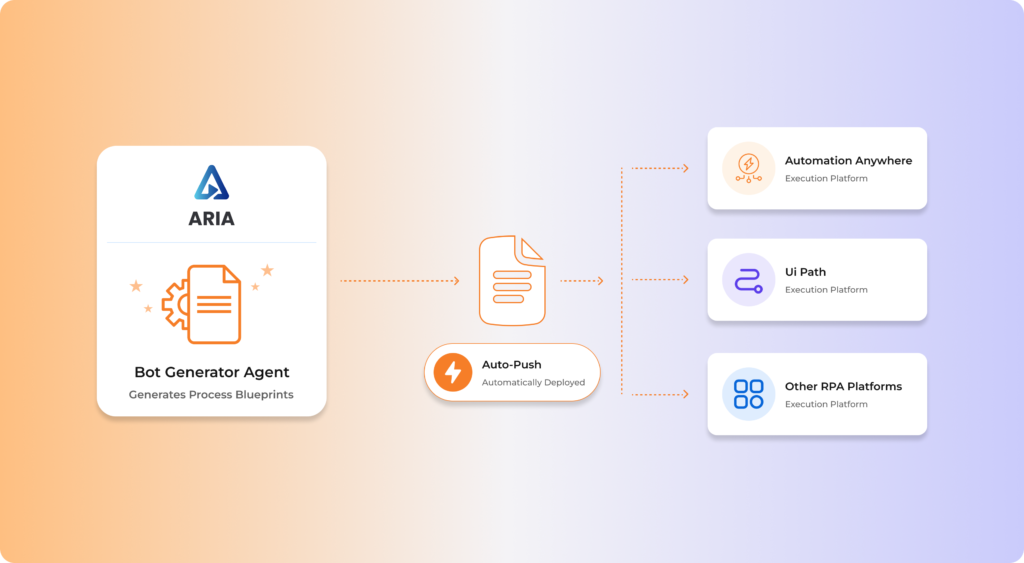
ARIA discovers your service operations — ticket handling, provisioning, environment management, incident workflows — and generates structured blueprints without the documentation overhead a fast-moving technology organisation is never going to willingly absorb.

Learn about ARIA
Stage 2

Deliver with 5D1S

The 5D1S methodology delivers at technology pace, with reusable components spanning ITSM, identity and cloud platforms, and a delivery framework built for estates that span entities rather than departments.

Explore the framework
AURA Logo
Stage 3

Sustain with AURA

AURA monitors your estate in real time, mapping every dependency across every entity, predicting failures before they become incidents, and turning a system outage into one known blast radius rather than ninety parallel investigations.

Learn about AURA

USE CASES

Technology use cases

Enterprise IT

Autonomous incident response

Alerts triaged, correlated across systems, known remediations executed, and a complete diagnostic package on anything that does need a person.

Shared services

Ticket triage and routing

Free-text tickets classified, prioritised and routed correctly at intake, rather than after the third reassignment.

Enterprise IT

Joiner, mover, leaver

Access provisioned and deprovisioned across dozens of systems and entities, with compliance evidence produced as a by-product.

Shared services

Multi-entity estate governance

One standard, one dependency graph, one monitoring view, across an estate that grew through acquisition rather than design.

SERVICES

Relevant solutions for Technology

SUCCESS STORIES

Proven results in technology.

Global shared services, 90+ entities

Alert volume triaged by hand across 90+ entities, with no dependency visibility, so every upstream change produced an unpredictable set of silent bot failures and every incident started with an investigation.

Full dependency graph registered under AURA, with an agentic triage layer absorbing alert volume at intake

AURA prevented 412 production incidents in 90 days. Uptime at 99%. MTTR down 71%.

Read full case study

Tier 2 Aerospace Manufacturer

Quality documentation consuming 35% of engineering team capacity across AS9100 and customer-specific requirements.

Automated quality document generation, routing, and archival with full audit trail and compliance verification.

Engineering time on documentation reduced by 72%. Zero non-conformances in first 18 months post-deployment.

Read full case study

BUSINESS OUTCOMES

Measurable impact in technology.

From active enterprise deployments across technology organisations and global shared services.

412

Incidents prevented in 90 days

Dependency-aware monitoring catching the upstream change before it reached the bot, and the bot before it reached the business.

71%

Faster mean time to resolution

Diagnosis replaced by a dependency graph that already knows which system changed and what it broke.

98%

Of issues meeting SLA

Fewer failed runs, fewer reruns, fewer breach events across the monitored estate.

99%

Uptime across the estate

Availability held across 90+ entities without headcount growing in proportion.

INSIGHTS

Related reading

View all insights →

Why Automation Programmes Stall in the First Six Weeks

How Enterprise AI Is Reshaping Business Decision-Making in 2025

FAQ

Common questions about AutomationCOE.

Not finding your answer? Email us directly.

AI and automation can help technology organizations automate high-volume IT operations such as ticket triage, incident response, access provisioning, and environment management. AutomationCOE uses ARIA to discover and structure these processes and AURA to monitor dependencies and automation performance across the enterprise.
AI can classify free-text IT tickets, determine their priority, and route them to the appropriate team at intake. AutomationCOE supports intelligent ticket triage to reduce unnecessary reassignments, improve response times, and help shared-service teams handle growing ticket volumes more efficiently.
AutomationCOE can automate incident-response workflows by correlating alerts across systems, identifying known remediation actions, and executing appropriate remediations automatically. When human intervention is required, the system can provide a diagnostic package to help IT teams resolve incidents faster.
Yes. AutomationCOE can automate access provisioning and deprovisioning across multiple systems and entities. This helps technology organizations manage joiner, mover, and leaver workflows at scale while producing compliance evidence as part of the automated process.
AURA maps dependencies across applications, systems, automations, and entities in real time. When a system or upstream dependency changes, AURA can identify which automations may be affected and predict potential failures, helping IT teams understand the potential blast radius before an incident occurs.
AutomationCOE provides a centralized approach to standards, dependency visibility, and runtime monitoring across multi-entity automation estates. ARIA supports process discovery and structured blueprints, while the 5D1S methodology provides reusable delivery components and AURA provides a unified monitoring view across the estate.